

Designing incident management for complex systems
Microsoft · UX / Product Design · Enterprise Software
Making critical information understandable when every minute matters.
Microsoft’s incident-management tools bring together incidents, outages, services, teams and on-call responsibilities into a single operational environment.
The challenge wasn’t a lack of information. It was too much information.
My role was to help turn that complexity into an experience where users could quickly understand what was happening, determine what required attention and take action.
The challenge
Incident response involves many interconnected pieces of information: severity, status, affected services, ownership, outages, notifications, escalation and on-call schedules.
Users needed to answer fundamental questions immediately:
What’s happening? How serious is it? Who owns it? And what needs my attention right now?
The interface needed to support those decisions without hiding the depth of information required by experienced users.
Creating hierarchy from complexity
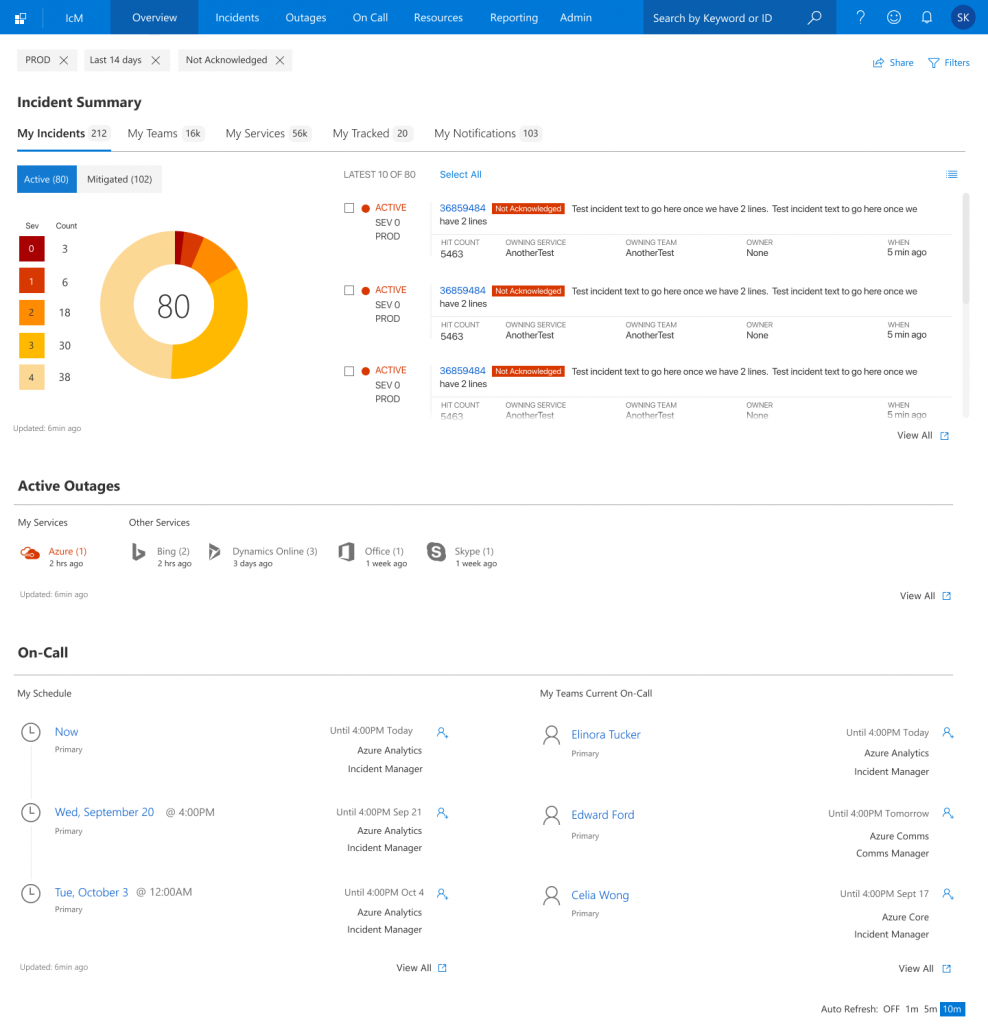
I focused on establishing a clear hierarchy around the information that mattered most.
Rather than treating every piece of operational data equally, the experience surfaced incident state, severity and ownership first, while keeping supporting information readily accessible.
Designing across screen sizes
Incident response doesn’t always happen at a desk.
The mobile experience distilled the same system into the information and actions most useful when someone was away from their workstation.
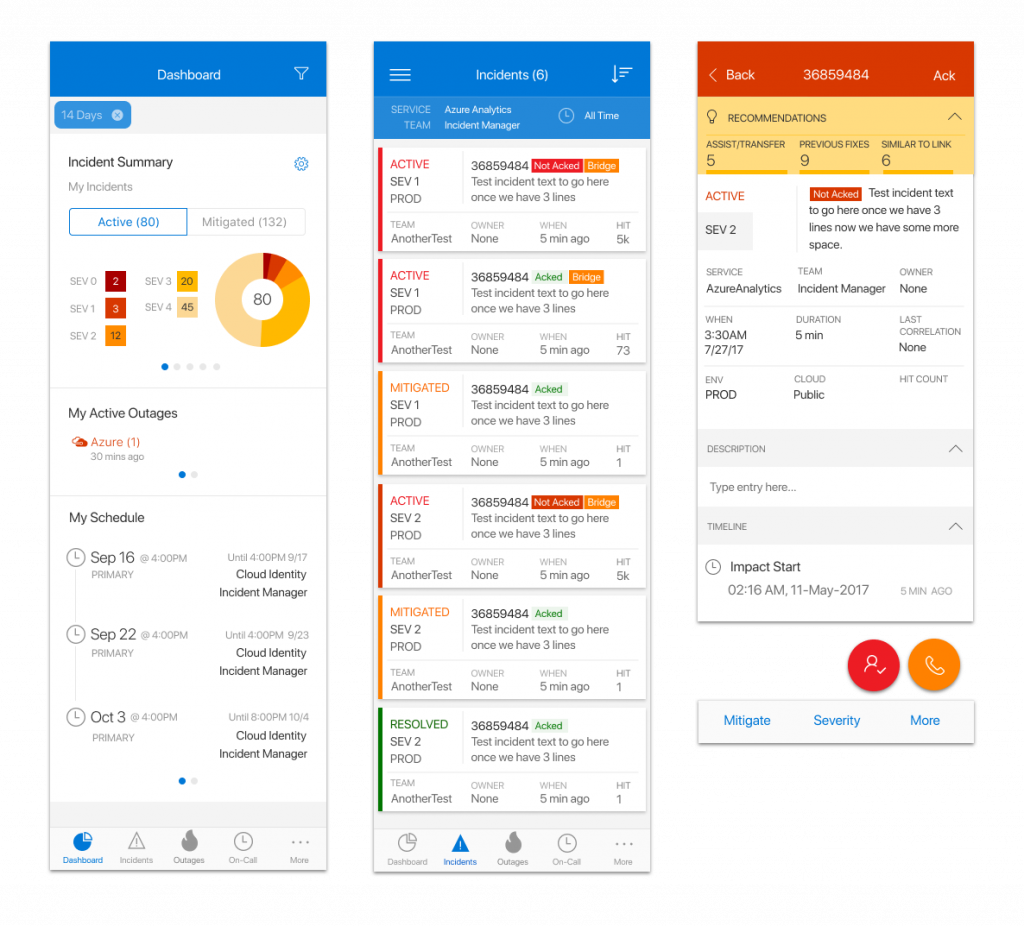
Desktop
Information density and situational awareness.
Mobile
Prioritization, rapid assessment and action.
Same product. Different context.
My contribution
UX Design · Interaction Design · Information Architecture · Responsive Design · Prototyping · Visual Design
I worked within a complex Microsoft ecosystem, translating operational requirements into interfaces designed around the decisions users actually needed to make.
Outcome
The IcM mobile experience reduced incident response time by 14 minutes, helping on-call engineers assess and respond to live incidents more quickly when away from their desks.
Across desktop and mobile, the work focused on making critical incident information easier to scan, understand and act on—turning a complex operational system into a clearer decision-making experience.
14 min faster incident response