

Designing the connected mobility experience
INRIX · Senior UX / Product Designer · Mobile + Automotive
Connecting traffic, navigation, parking and services across phones and cars.
At INRIX, I worked on products that transformed enormous amounts of transportation data into experiences drivers could actually use.
My work crossed iOS, Android, navigation, parking and connected-car interfaces, including exploration of an extensible in-car application platform.
The problem
A connected car can expose dozens—or eventually hundreds—of functions and services.
Navigation. Traffic. Parking. Music. Restaurants. Vehicle controls. Communications. Notifications.
Adding functionality isn’t difficult.
Making all of it understandable and safe to use in a vehicle is.
The fundamental question became:
How do we create an interface that can grow without becoming increasingly complicated?
Start with people, not screens
Before designing interfaces, I explored what drivers actually needed the system to accomplish.
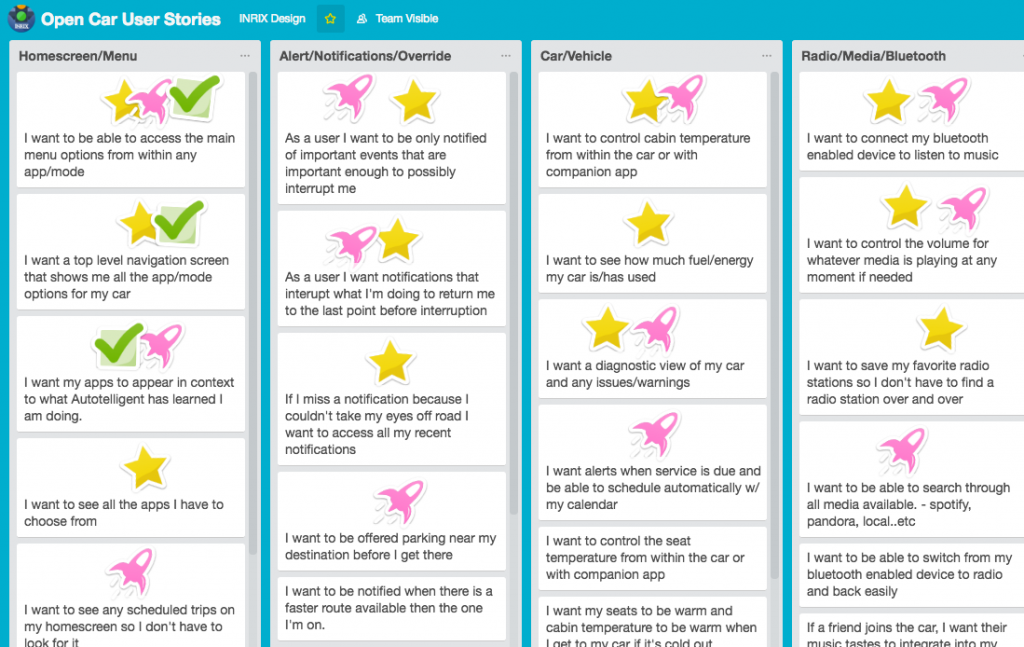
Instead of beginning with an app menu, requirements were framed around user intentions:
I want to find parking near my destination.
I want important notifications without unnecessary interruption.
I want to return to what I was doing after an interruption.
I want vehicle controls to be available when they’re relevant.
This helped separate user needs from implementation decisions.
Organizing the ecosystem
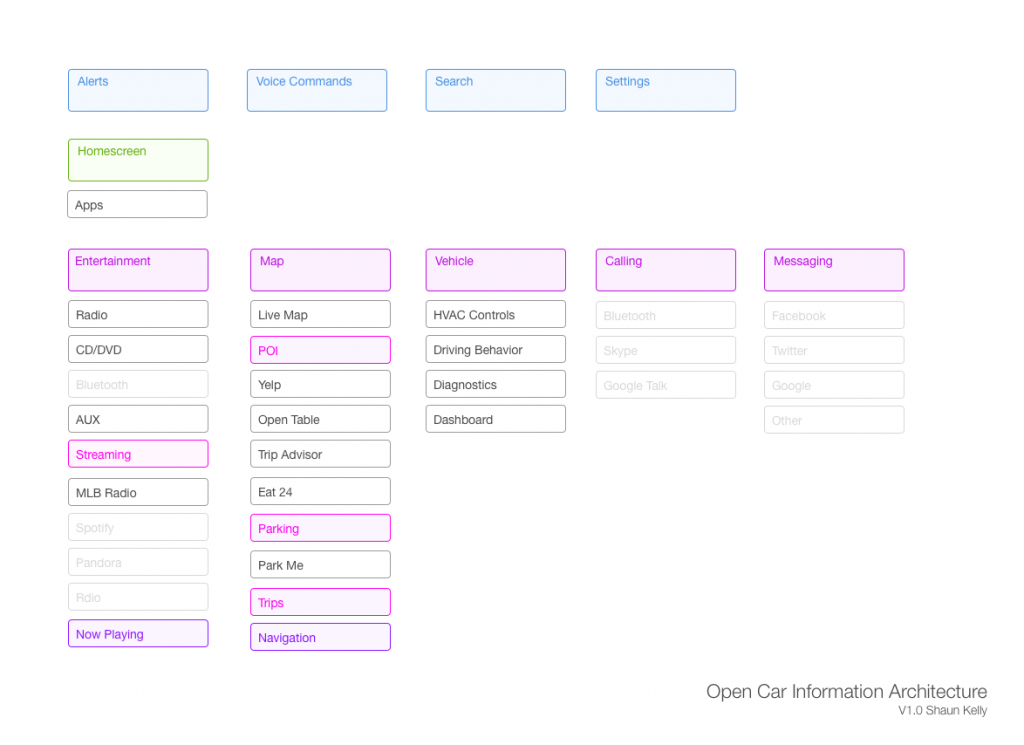
Those needs were translated into an information architecture covering navigation, entertainment, vehicle functions, communications, alerts and services.
Exploring interaction
A touchscreen was only part of the problem.
Drivers needed predictable interaction patterns that reduced the amount of visual attention required.
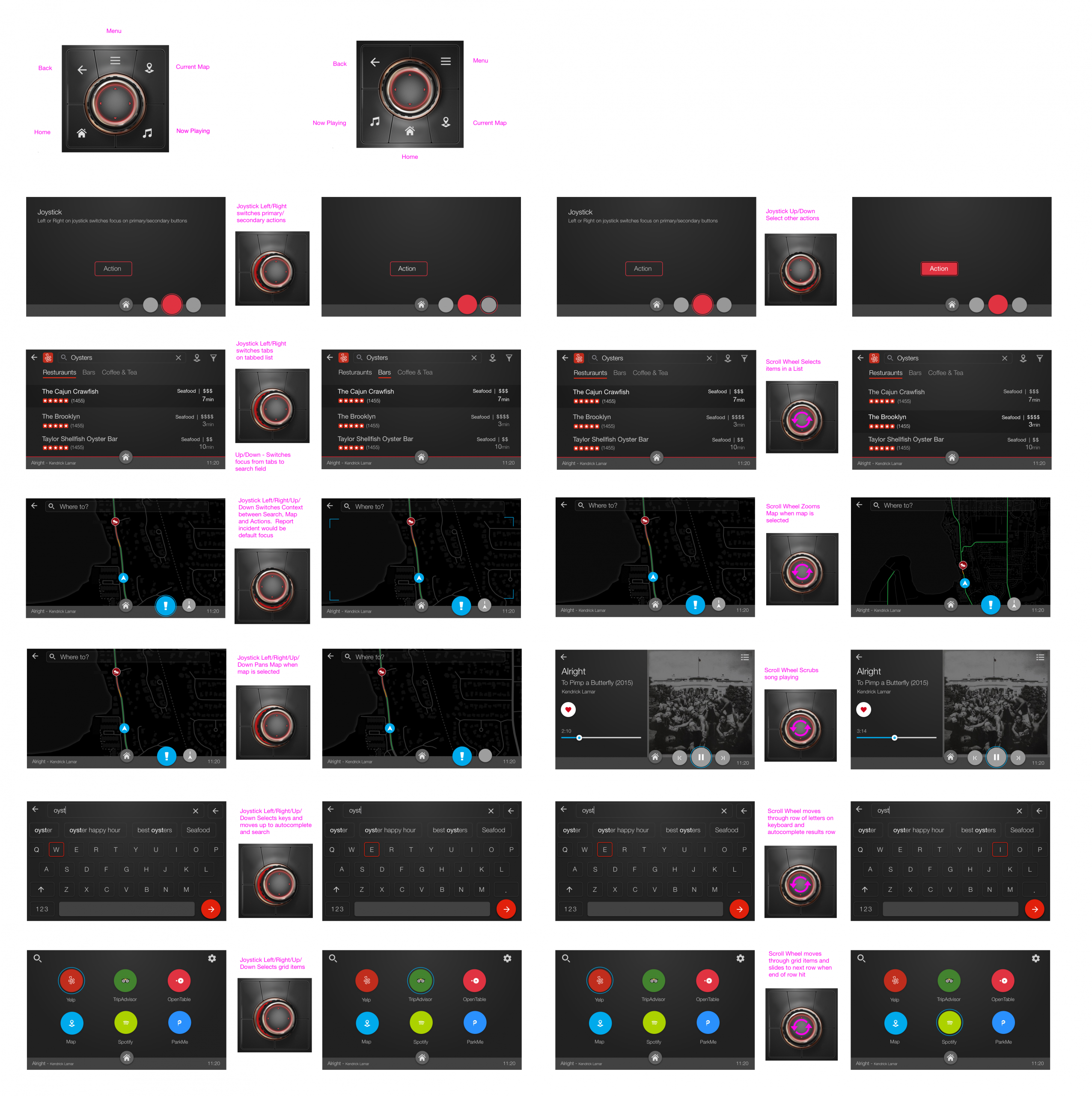
I explored how steering-wheel and console controls could provide consistent directional navigation across maps, lists, search, media and applications.
Building a system
As the product developed, interaction principles became reusable patterns.
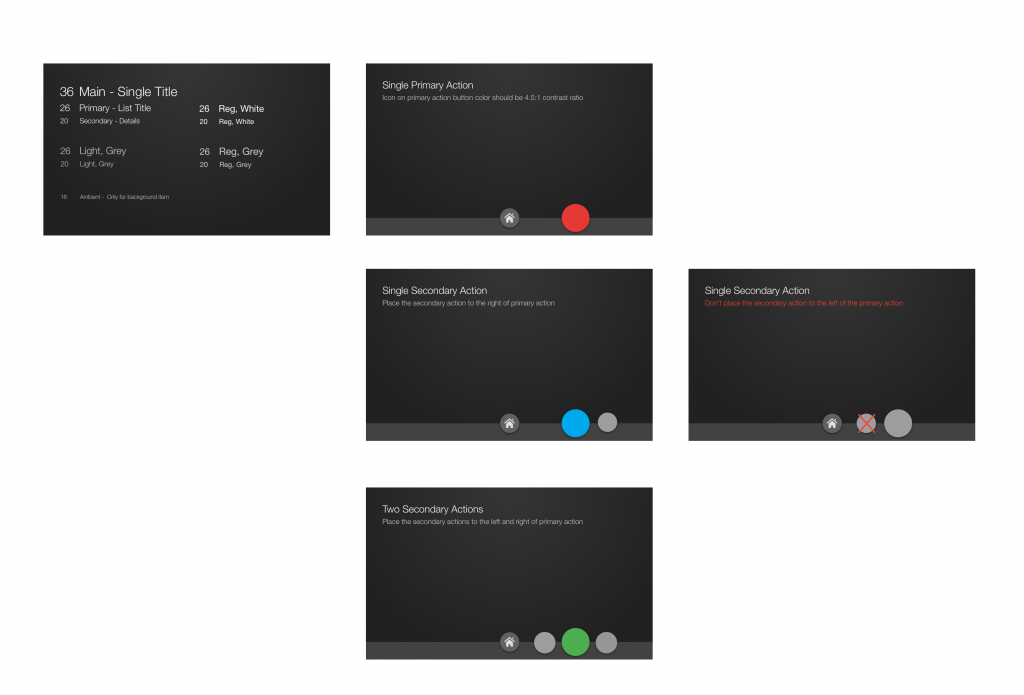
Typography, primary and secondary actions, navigation positioning and interaction behavior were documented so that new experiences could behave consistently.
The goal wasn’t simply visual consistency.
It was predictability.
A user learning one part of the system should understand how another part behaves.
From system to experience
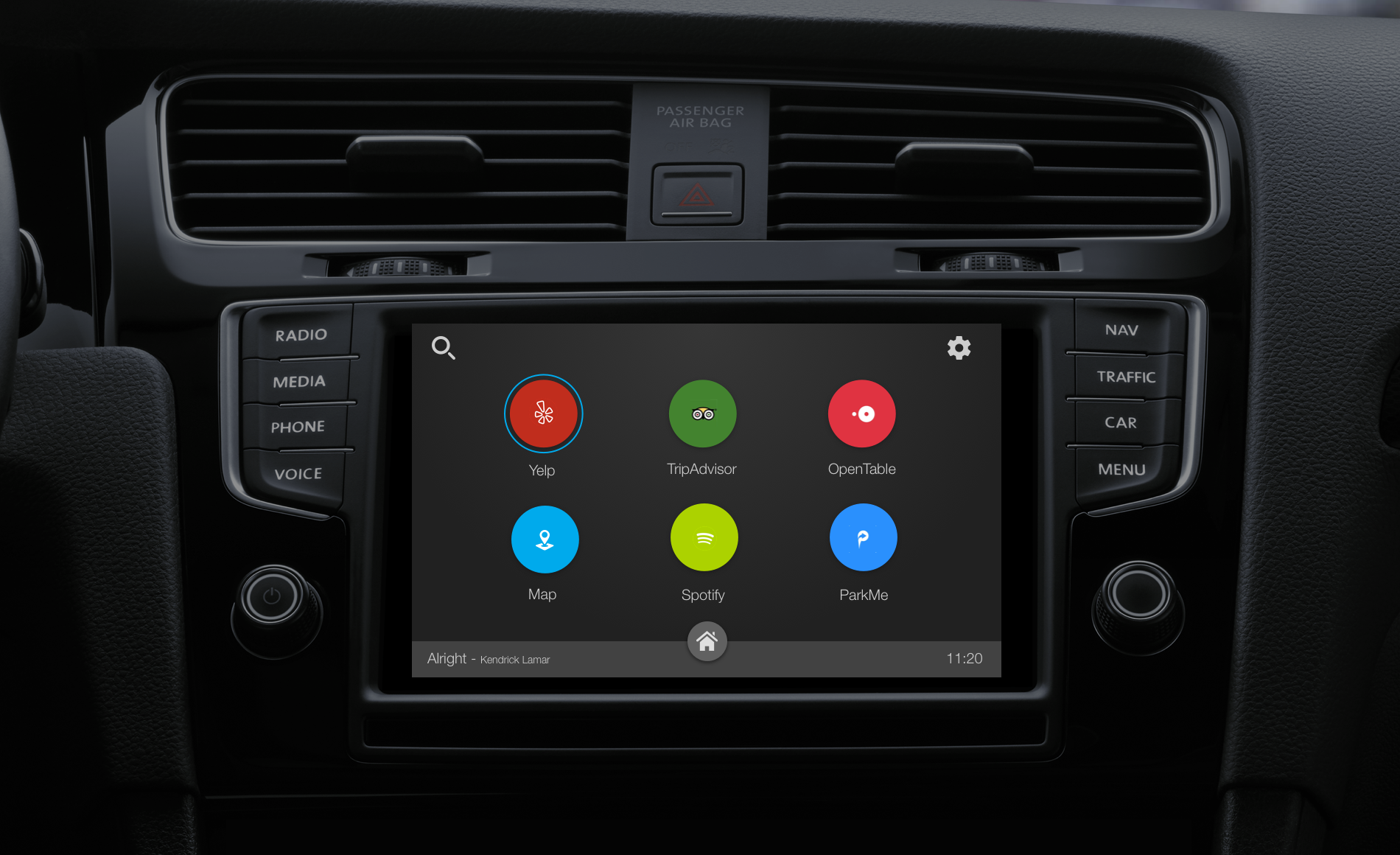
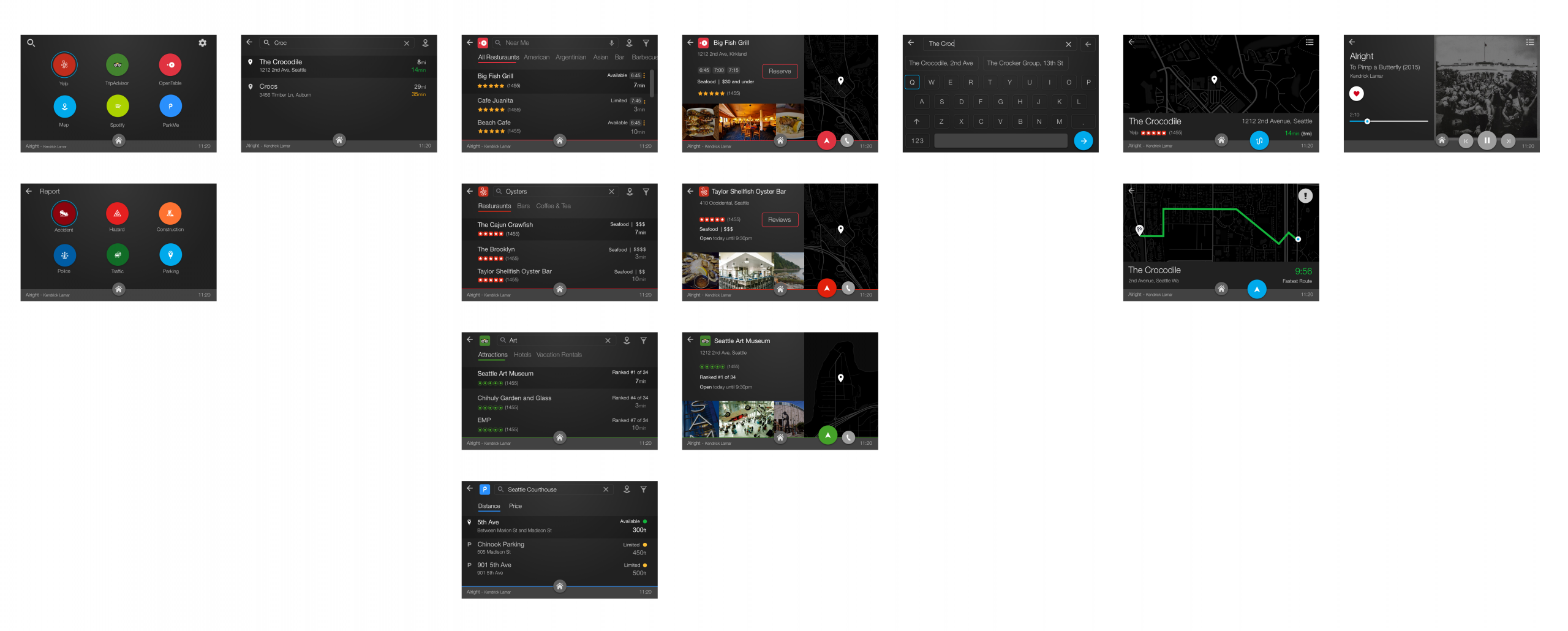
One interface connecting navigation, entertainment, local services and vehicle functionality.
Extending the experience to mobile
Connected mobility doesn’t begin when someone starts the engine.
I also designed INRIX mobile experiences around traffic, trips, destinations and parking.
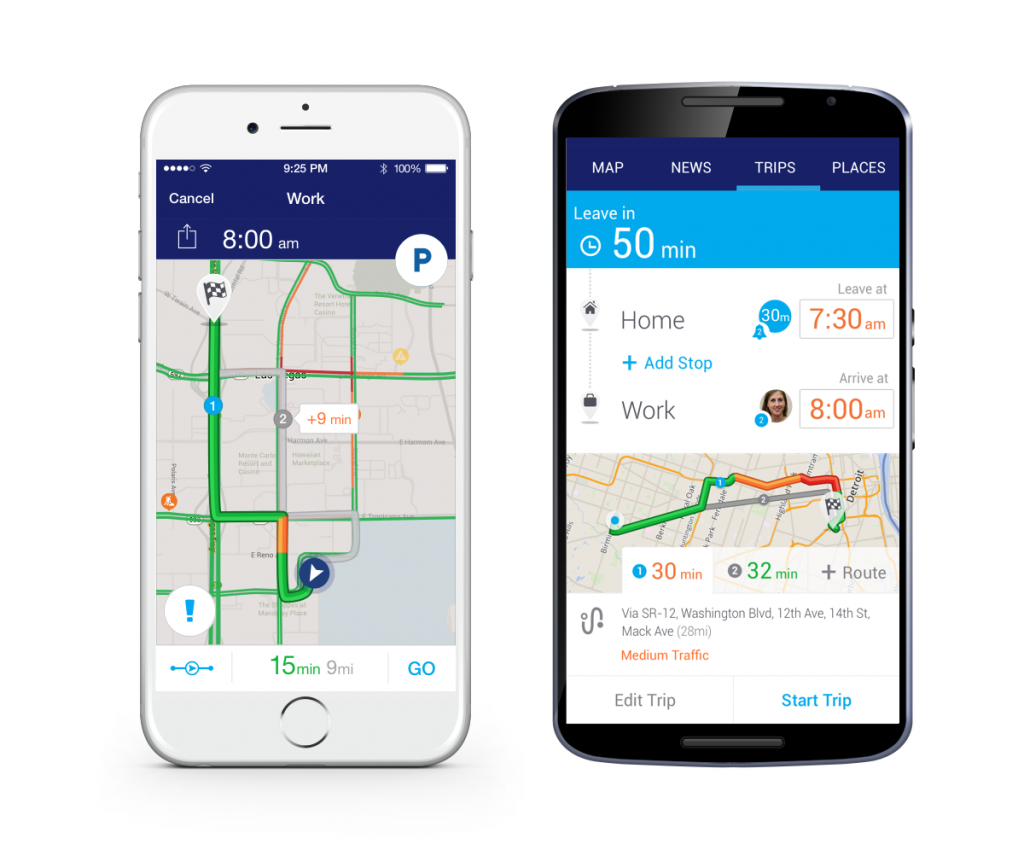
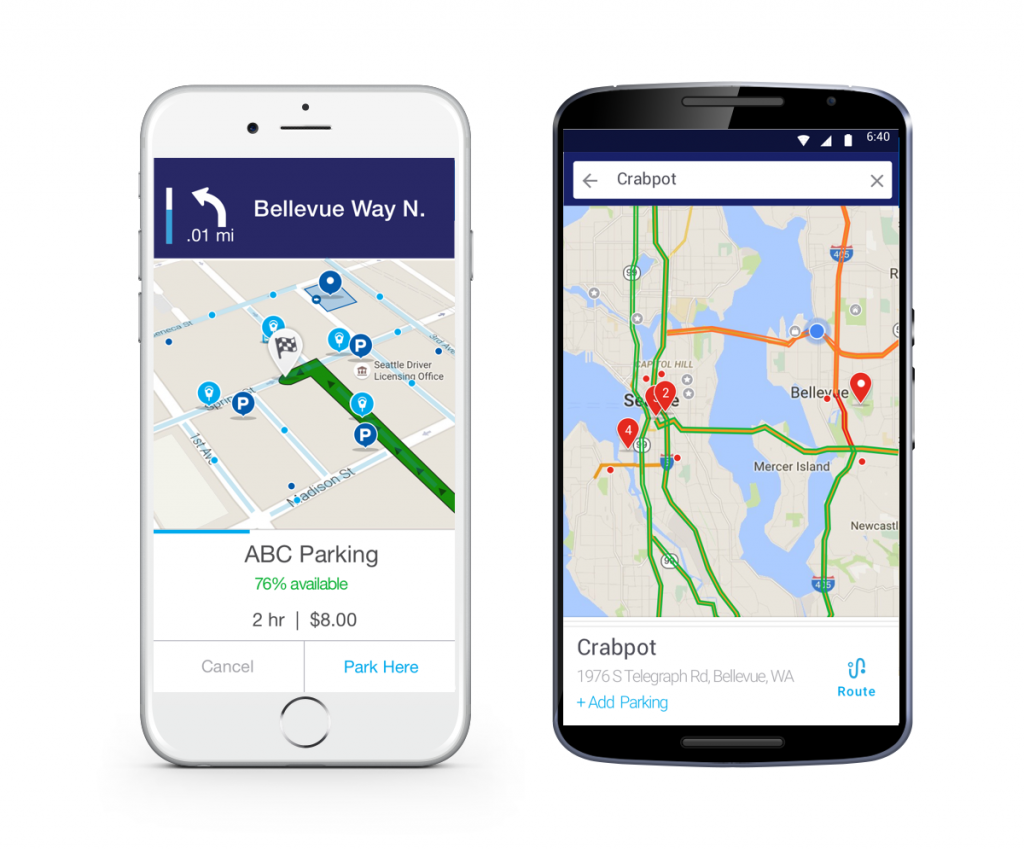
My contribution
Product Design · UX Design · Interaction Design · Information Architecture · Mobile UX · Automotive UX · Prototyping · User Stories
The work ranged from defining requirements and information architecture through interaction models, wireframes and production interface design.
What I learned
The most successful complex products aren’t necessarily those with fewer capabilities.
They’re the ones that make complexity feel manageable.
That principle has followed me through nearly everything I’ve designed since.